
The spring mission, which brought together teams from PIM Initiative, HELP Sarl, and the OFB on the Sanguinaires Islands, confirmed the success of the rat control effort carried out in the fall of 2025! This operation was carried out as part of the Life Mobile Marine Species (Life MMS) project, co-financed by the European Union and the Ministry of Ecological Transition and coordinated by the OFB, in close collaboration with local managers from the Joint Management Association of the Sanguinaires Islands and Pointe de la Parata (SMPP).
The program aimed to eliminate the black rat population on the island, which poses a threat to local biodiversity—including the seabirds that nest there each year—and prevents the Yelkouan shearwater, an iconic Mediterranean species that no longer nests in Corsica, from establishing a colony (see press release dated September 1, 2025). Following the rat eradication, the biosecurity system designed to prevent any recolonization remained in place on the archipelago and was monitored every two months by agents from the Syndicat Mixte de la Pointe de la Parata et des Îles Sanguinaires. These agents were trained by teams from PIM Initiative and HELP Sarl to independently monitor for the presence or absence of rats.
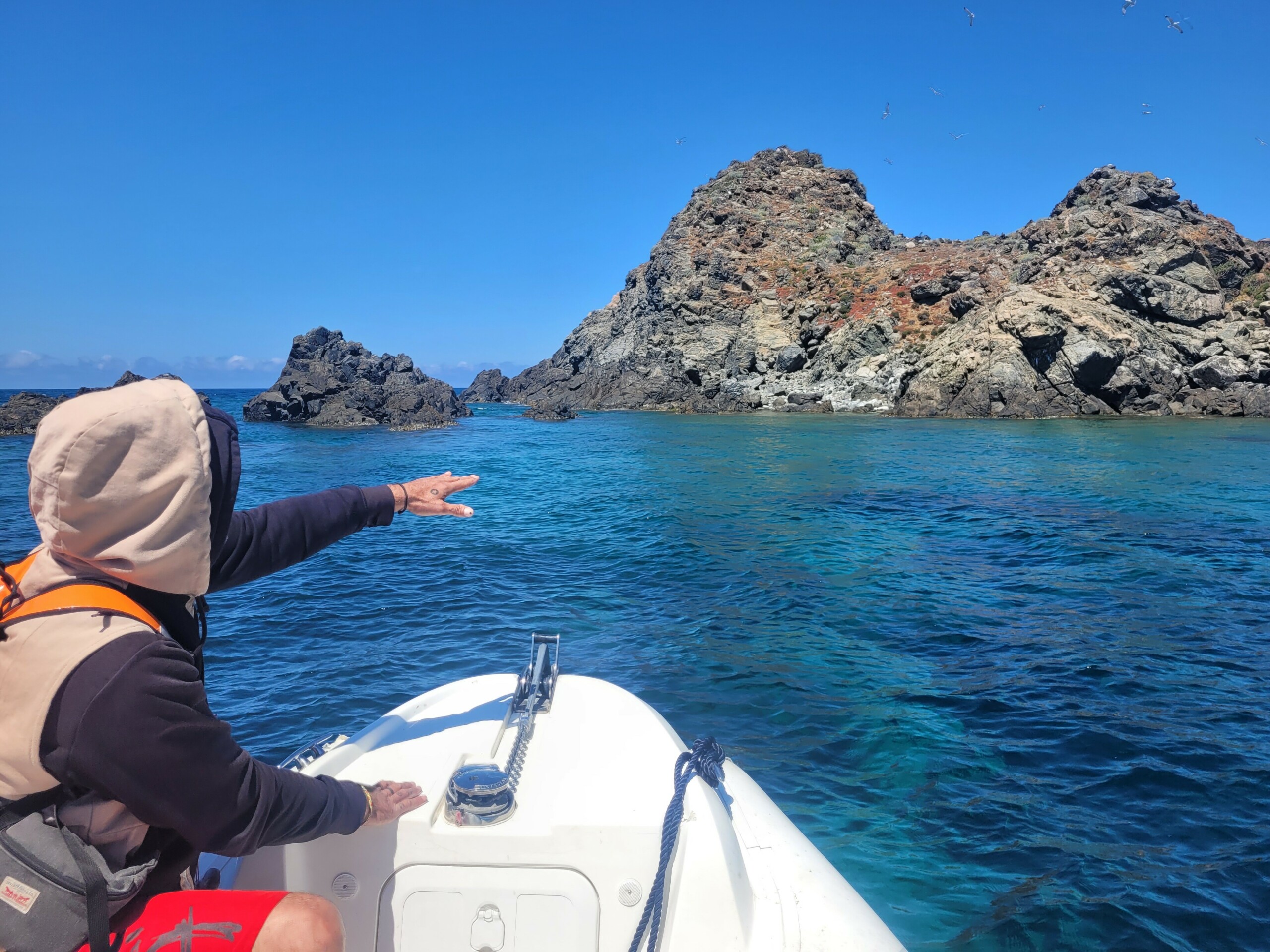
Field surveys aimed at assessing and monitoring the impact of rodent control on the local ecosystem began in 2026. Following nesting surveys of breeding seabirds (Yellow-legged Gulls and Mediterranean Shags) conducted by the SMPP earlier in the year, the May 2026 mission brought together numerous experts (Yoan Braud (Entomia), Michel Delaugerre, Gilles Faggio (OEC), etc.) to begin assessing the state of the archipelago’s biodiversity following the eradication of the black rat. Organized by the Initiative PIM team in collaboration with the managers, this mission enabled several monitoring studies to be conducted on various biological components (entomofauna, reptiles, vegetation, etc.).
In addition to these monitoring efforts, an inspection of the post-eradication biosecurity measures for the black rat, conducted by the Help Sarl team, confirmed that there is not a single rat left on the archipelago. The small mammal survey conducted during the 7-day mission found no evidence of any small mammals on the island that might have taken advantage of the black rat’s disappearance to establish themselves or thrive. The success of the black rat eradication operation on the archipelago therefore remains, at this stage, a resounding success.
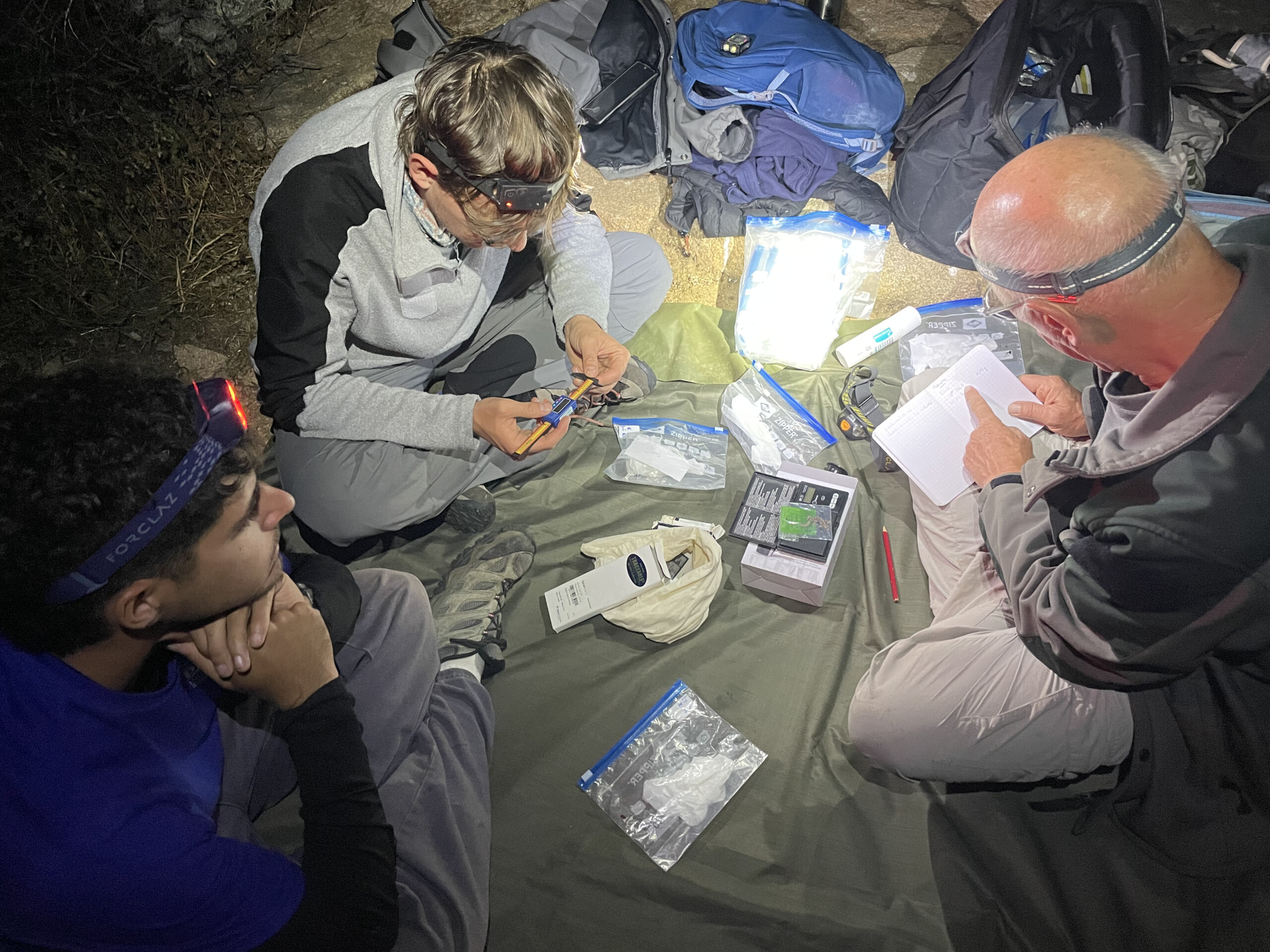
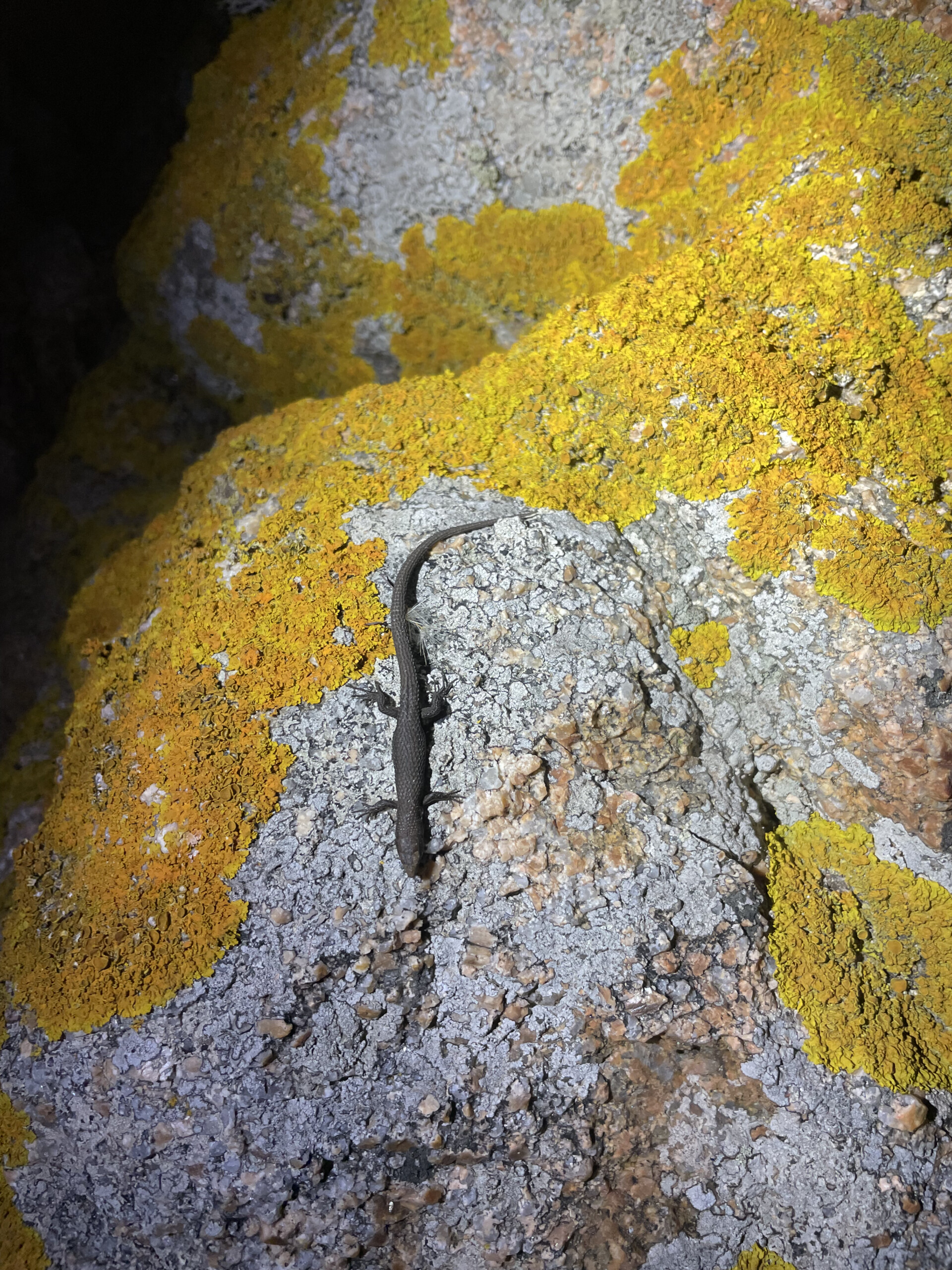
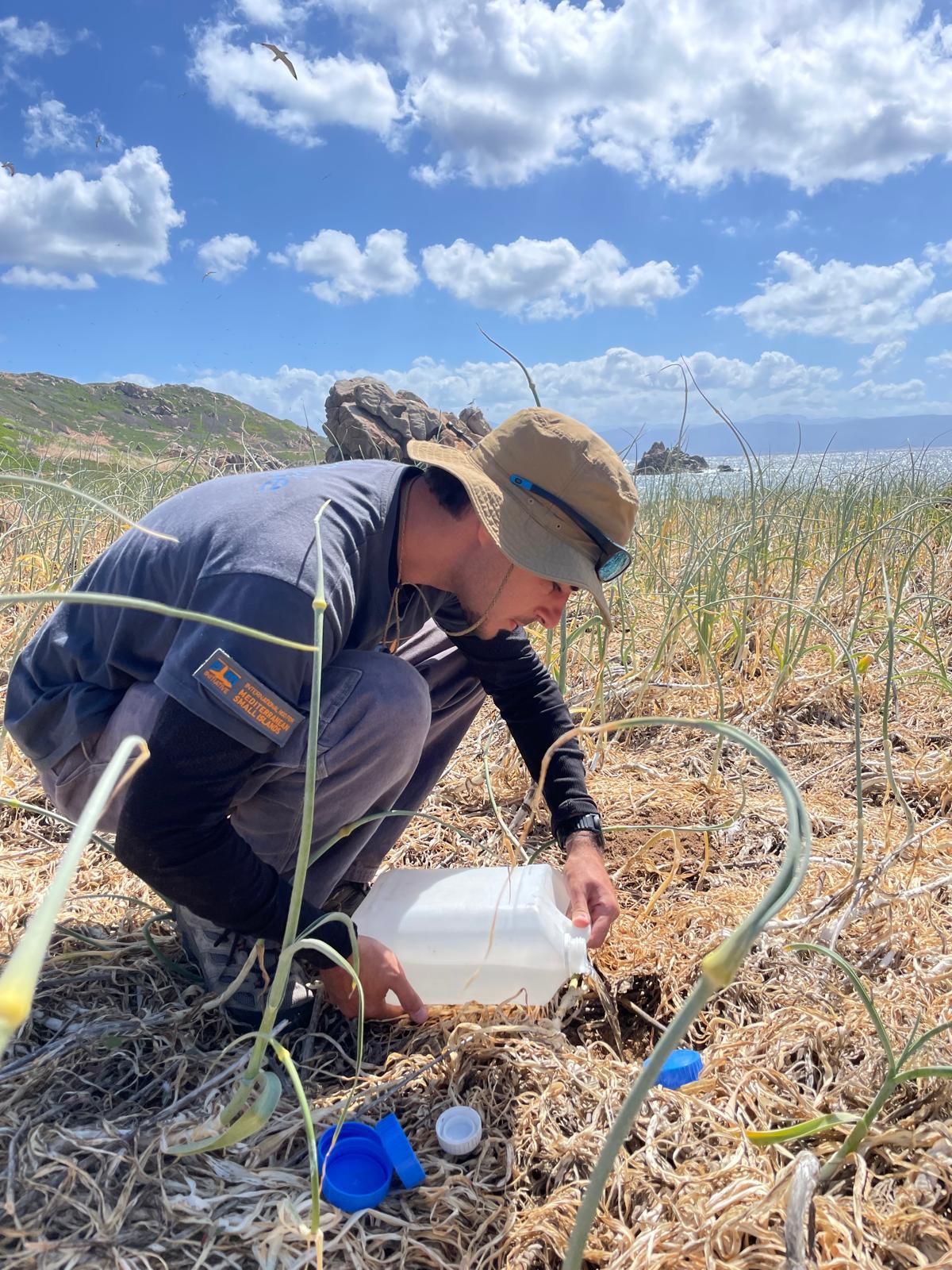
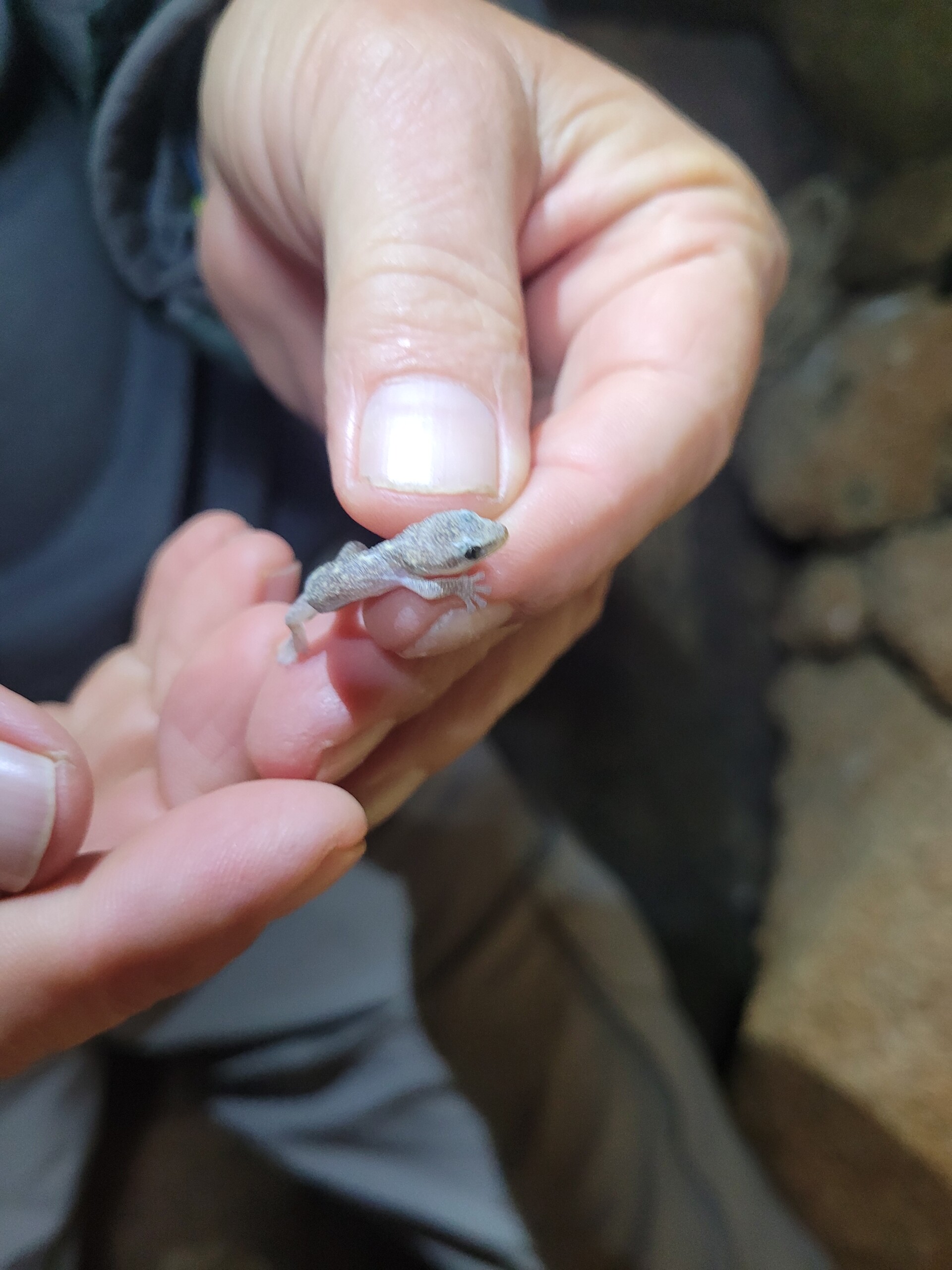
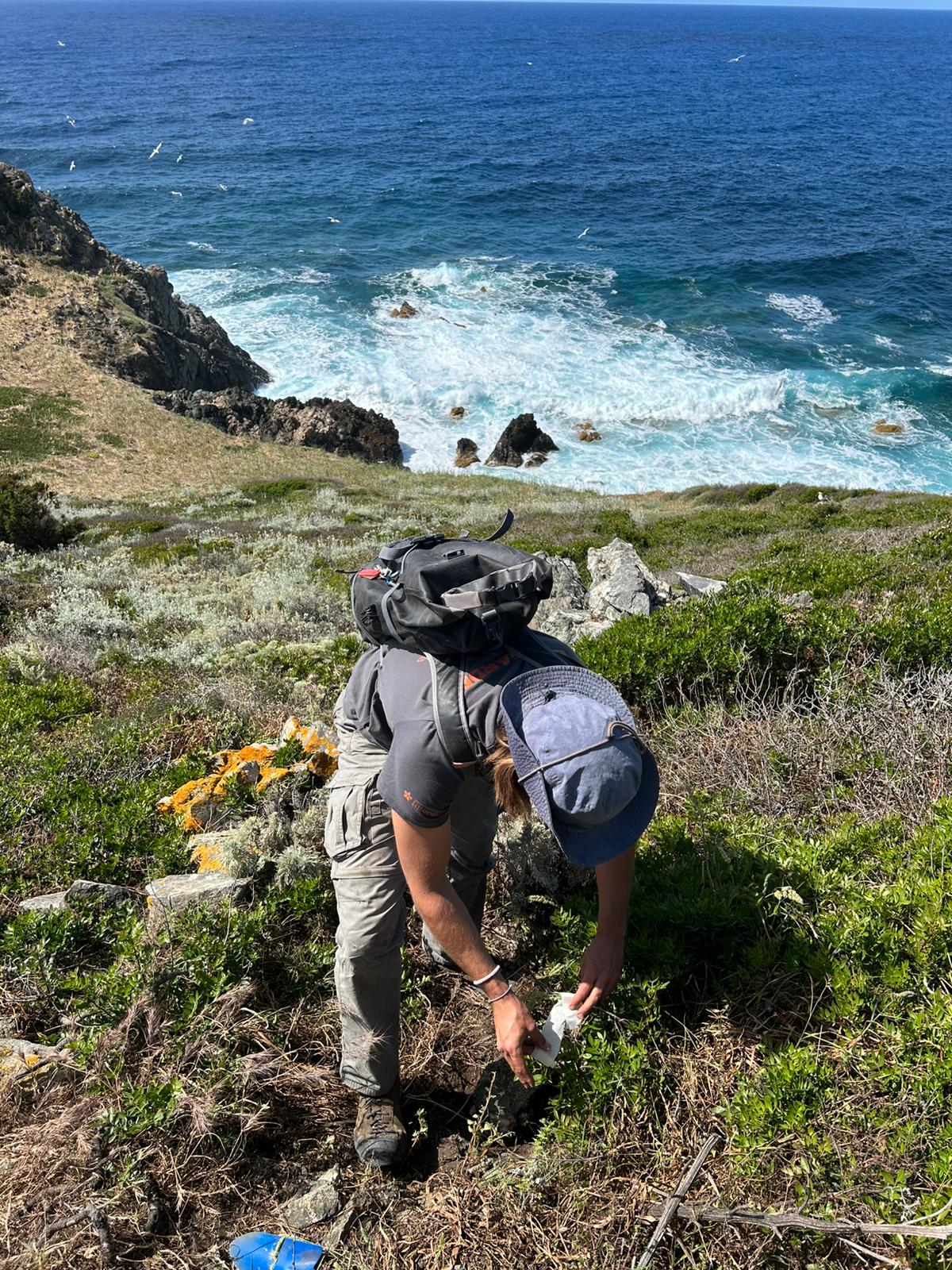
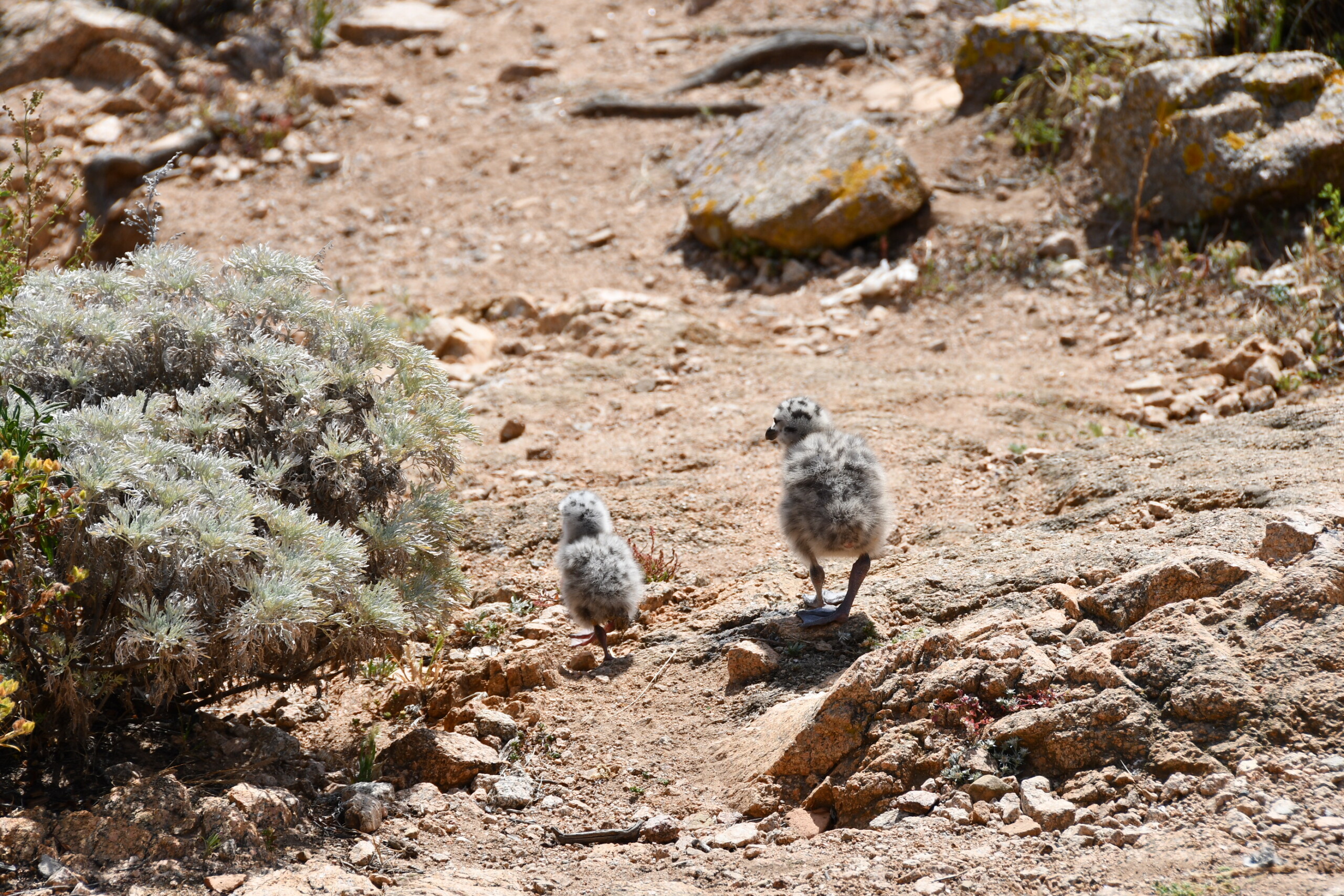
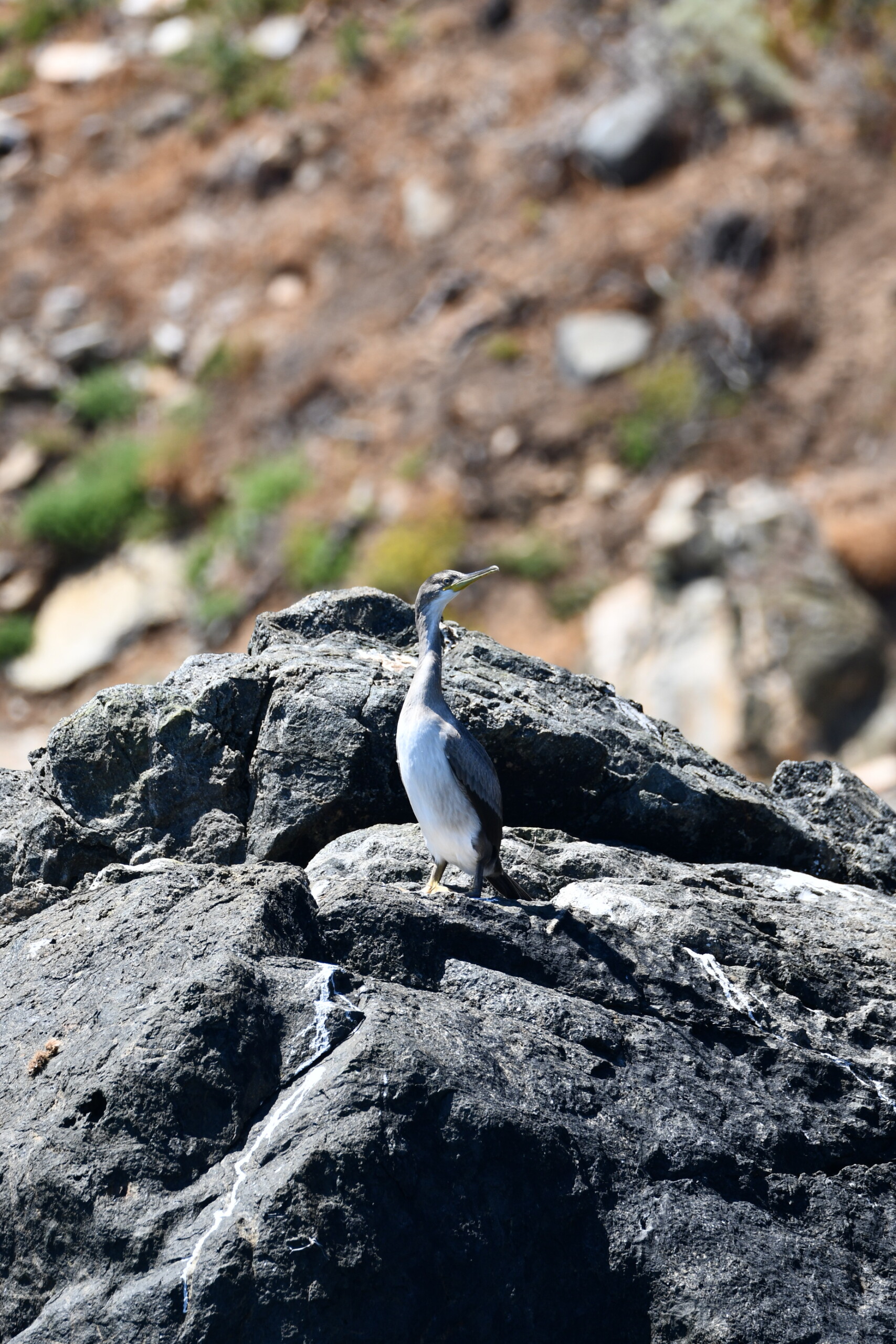
⚠ The handling of protected species is subject to French regulations and requires a special permit, and has been carried out solely for scientific monitoring purposes.
While the results of the ecological monitoring studies do not yet allow us to draw conclusions about the benefits of rodent control on the island’s biodiversity, the discovery of the very elusive Fitzinger’s Algyroid lizard on the island of Mezzu Mare on May 19, 2026, during a nighttime survey—previously unknown on the island and previously recorded only on the island of Gargalu in Corsica—is very interesting! Also, the discovery of a peregrine falcon nest with three healthy chicks on April 7, 2026, seems to indicate that nesting conditions are quite favorable!
The PIM Initiative teams took advantage of their time in the field to educate sixth-grade students from Arthur Giovanni Middle School, who were on a field trip, about best practices for preserving biodiversity on small islands! Boat operators and local business owners who frequent the archipelago were also educated about biosecurity measures to prevent the return of the black rat to the archipelago. Finally, the mission was featured in the Corse Matin newspaper!